
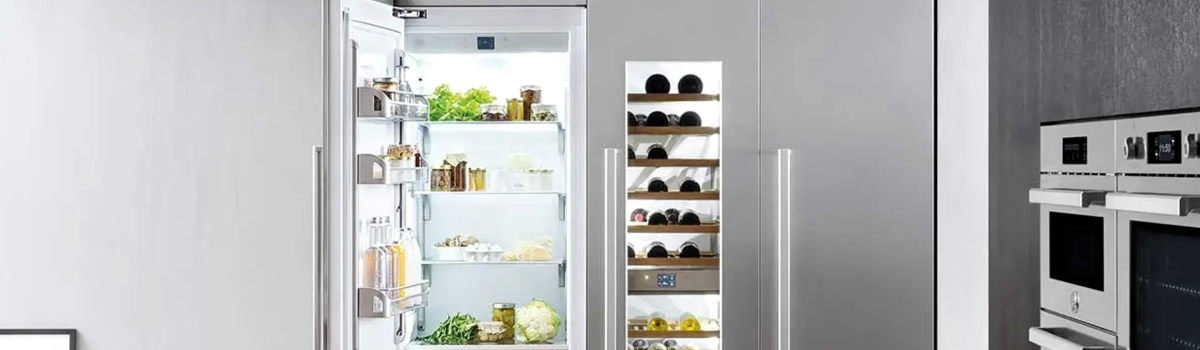
When a Bertazzoni fridge throws an E7, it’s telling you the ambient (room) temperature sensor isn’t giving the control board a believable signal. That sensor sits outside the insulated food compartment—typically behind a front grille or near the display/control area—and its only job is to “tell” the fridge how warm the room is so the cooling logic can adjust intelligently.
If the board can’t trust that reading, temperatures drift. You might see food running warmer than setpoint, the unit over-cooling and wasting energy, or even frost buildup from excessive runtimes. Left alone, it can shorten component life and quietly ruin groceries.
Why this sensor matters
Modern refrigerators don’t just react to the compartment thermistors—they also consider room conditions. On a hot day, the unit expects to work harder; on a cool night, it should back off. The ambient sensor is usually a simple NTC thermistor (a small resistor that changes value with temperature). If it fails open/short, is damaged, or its wires are loose, the control logic can’t “scale” correctly and raises E7.
Common causes (most to least likely)
- Failed sensor (NTC) or cracked wiring harness from vibration, pinching, or corrosion.
- Dirty or obstructed sensor (dust, grease, paint overspray) preventing accurate readings.
- Heat/sunlight blasting the control area, or installation too close to ovens/radiators.
- High humidity/condensation around the sensor corroding the connector.
- Control board input issue (rarer, but possible).
Quick checks before you call for service
Safety first: unplug the refrigerator or switch off the breaker before touching any wiring.
- Power cycle (2–3 minutes off): Clear a transient error and reboot the control. If E7 returns within minutes, keep going.
- Look at the installation: Is the unit in direct sun? Snugged into a tight alcove with no airflow? Right next to a range? Correcting those can prevent future sensor failures.
- Inspect the sensor area (typically near the control panel/grille):
- Lightly clean dust/grease with a soft, dry cloth.
- Check for obvious damage: cracked housing, chewed/flattened wires, loose connector.
- Observe behavior after restart: If temperatures still swing or the error returns, the sensor likely needs replacement.
DIY note (for technically inclined): The ambient sensor is an NTC thermistor. Exact resistance specs vary by model; without the service manual you shouldn’t guess. If you do test, measure resistance at room temp and compare to the official chart for your model.
When replacement is the right move
If cleaning and repositioning don’t help—or the harness looks bruised or brittle—the fix is usually replacing the ambient sensor. It’s a small part, but placement and wiring access can vary by model, and you want the correct resistance curve. That’s why most owners opt for a qualified appliance technician to:
- Confirm the fault (sensor vs. control input)
- Fit the correct OEM-spec sensor
- Reroute/secure wiring to prevent repeat failures
- Run post-repair temperature and self-test checks
Preventing another E7
Keep the area around the controls clean, give the refrigerator proper ventilation clearances, and avoid direct sunlight or adjacent heat sources. In hot, humid climates, a dehumidifier can reduce condensation around electronics and connectors. Periodically wipe dust from the front grille/control area; it takes seconds and helps sensors read true.
What you might notice with a bad ambient sensor
- Compartment temps drifting warmer/colder than the display.
- Longer or nonstop compressor runs, higher energy bills.
- Frost/ice accumulation where you didn’t see it before.
- E7 reappearing shortly after reset.
If you’ve worked through the basics and E7 keeps coming back, it’s time for professional diagnostics. Ask for a tech familiar with Bertazzoni controls to verify the sensor values against the model’s service chart, inspect the harness end-to-end, and rule out a control-board input fault. That way you get a clean, lasting fix—not a temporary reset.