
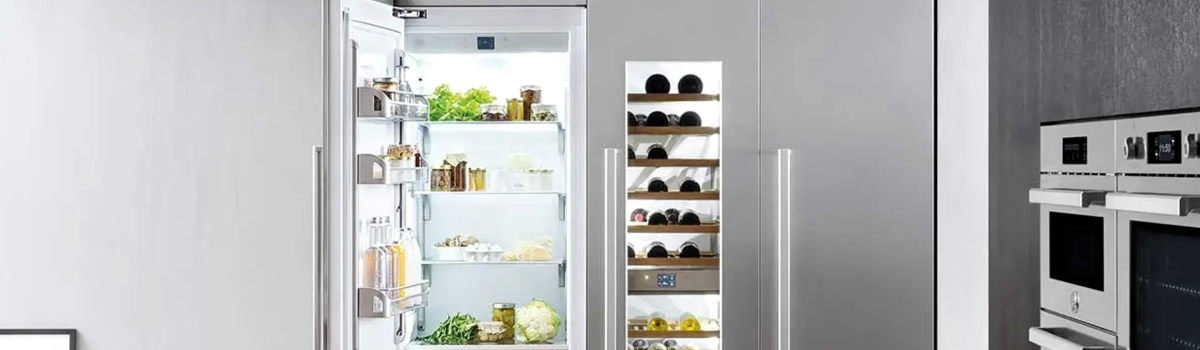
When your Bertazzoni shows C9, the fridge is telling you it can’t trust the ice-making chamber sensor. That sensor tracks conditions around the ice maker—mainly temperature—and feeds data to the control board. If the board stops getting believable readings, ice production becomes unreliable: cubes slow down, get misshapen, or stop entirely. In some cases you’ll also see odd cycling—short bursts of operation that never quite finish a full ice-making run.
Why it happens
Most C9 cases come down to one of three things:
- A faulty sensor (age, moisture ingress, physical damage).
- Wiring trouble between the sensor and the control board (loose plug, rubbed/oxidized connector, pinched or broken lead).
- Harsh temperature swings inside the ice compartment (for example, a door that’s not sealing, or repeated long door openings that confuse the control logic).
First steps you can safely try
Keep it simple and safe—no live-current probing, no panel removal you’re not comfortable with.
- Power reset: Turn the fridge off, unplug it, wait at least 10 minutes, then restore power. This clears a stuck reading and forces the board to re-initialize the sensor.
- Door and airflow check: Make sure gaskets seal firmly, shelves or bins aren’t blocking vents, and the ice bin seats correctly. Poor airflow = unstable temperatures that can trigger C9.
- Visual once-over: With power disconnected, look for obvious wiring issues you can see without disassembly—loose connectors near the ice maker, kinked or pinched harnesses, corrosion on a plug. If you see damage, don’t keep cycling power—note what you found and plan a repair.
- Return to stable use: After the reset, give the fridge a few hours of normal, closed-door operation. If C9 returns quickly, the fault is likely persistent (sensor or harness), not a one-off glitch.
When a part likely needs replacing
If C9 pops back after a clean reset and stable cooling, the ice-compartment sensor is the prime suspect, with the harness a close second. Either way, replacement is straightforward for a pro: access the ice assembly, test/ohm the thermistor (sensor), verify continuity on the harness, and replace the failed component. If you’re DIY-savvy and have the exact service instructions for your model, you can attempt it—but most owners prefer a technician to avoid damaging the liner, connectors, or board.
Signs you shouldn’t wait
- No ice at all for 24–48 hours despite normal freezer temps
- C9 returns immediately after every power cycle
- You notice condensation, frost buildup, or water around the ice compartment (often a seal/airflow clue that exacerbates the sensor fault)
Preventing a repeat
Keep the door seals clean and springy, avoid overfilling the freezer (it chokes airflow), and try not to leave doors open during loading. If you had recent cabinet work or the fridge was moved, double-check the appliance sits level—an out-of-level install can affect doors and airflow around the ice section.
C9 = the ice-making chamber sensor isn’t providing a reliable reading. Try a careful power reset and basic airflow/door checks first. If the code returns, plan on a sensor or harness replacement. That’s a quick, targeted repair for a certified technician—and it’s the surest way to restore steady, crystal-clear ice without chasing intermittent symptoms.