
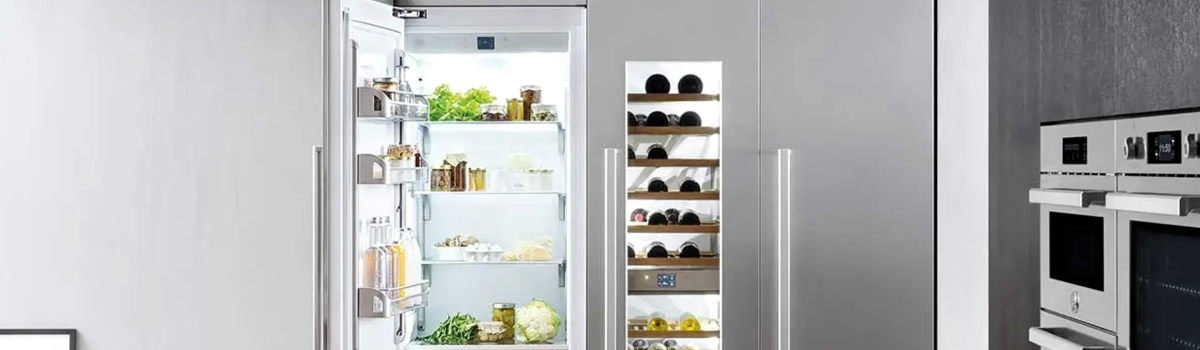
E5 on a Bertazzoni fridge points to a failed freezer frost sensor—the little thermistor that “feels” frost/coil temperature on (or near) the evaporator. When that reading goes missing or wrong, the control board can’t time defrost cycles correctly. The result is predictable: frost creeps across the evaporator, airflow drops, and temps drift.
How it shows up in real life
First, the code on the display. Then the symptoms: the freezer may still feel cold, but the fridge side warms up; fans get noisy as ice brushes the blades; you might see snow-like frost behind the rear freezer panel; ice production slows or stops. If it continues, you’ll get longer run times, higher energy use, and—eventually—spoiled food.
Why the sensor fails
Most of the time it’s one of three things:
- The sensor itself has aged out or is defective.
- Wiring issues: a loose connector, pinched harness, or corrosion at the plug.
- Environmental damage: heavy frost/ice or moisture ingress that stresses the sensor or its wiring.
Dirt on the sensor doesn’t “insulate” much, but sticky debris or oxidized contacts can throw readings off or break continuity.
Quick, safe checks you can do
Always unplug the refrigerator (or switch off the breaker) before you touch anything inside.
- Basic reset
Plug issues do happen. Confirm power, then power-cycle the unit for 3–5 minutes. If E5 returns quickly, keep going. - Look and listen
Open the freezer, remove bins, and look for unusual frost buildup along the back wall. A light, even frost is normal; thick snow, rime ice, or a solid sheet is not. - Access the sensor area (visual only)
Behind the rear freezer panel lives the evaporator/defrost assembly. If you’re not comfortable removing trim panels or if your model uses delicate snap-tabs, stop here. If you do peek, you’re looking for obvious damage: broken wiring, a dangling probe, corroded connector. Do not chip ice with tools—cracked coils are an expensive mistake. - Gentle cleanup
If you can see the sensor head and it’s gunky, a soft, dry cloth is fine. Avoid liquids, sprays, or alcohol on connectors. Re-seat any easy-to-access plug once (with power off), making sure it clicks home.
If the code persists after a basic reset and visual tidy-up, the sensor is likely out of spec or the harness/board needs diagnosis with a multimeter—work best left to a pro.
When to call a technician (and why it’s worth it)
A tech can ohm the sensor at a known temperature, verify harness continuity, and confirm the control board is reading correctly. If the sensor is bad, replacement is straightforward once the panel is off; if wiring is the culprit, catching it early prevents repeat failures. Letting E5 ride risks a solid ice block on the evaporator, bent fan blades, and in extreme cases water intrusion around electrical parts.
Preventing a repeat
- Keep doors sealing tight. Torn or dirty gaskets invite moisture and frost.
- Don’t block airflow. Leave space around the evaporator cover and top shelves; packed boxes trap cold air.
- Limit long door-open times. Humid air becomes frost on coils.
- Defrost correctly if you ever need to. Power off, doors open, towels down—no heat guns or sharp tools.
- Annual dust-out. Clean condenser areas so the system isn’t overworked; a cooler, happier system means gentler defrost cycles.
Where the sensor sits
Model layouts vary, but the freezer frost sensor is typically clipped to or near the evaporator tubing, behind the freezer’s rear panel. It reports coil/frost temperature back to the control board to decide when to start and stop defrost.
E5 means your fridge can’t “sense” frost correctly. A quick power check and visual inspection are worth trying; gentle cleaning and re-seating a connector can help if it’s minor. If the code returns, schedule service to test/replace the sensor and inspect the harness. Fixing it promptly protects your food, your energy bill, and the rest of the cooling system.